Psilocybin for Veterans with PTSD: Moral Injury and the Long Way Home
The War That Doesn’t End When You Come Back
Long after the uniform is folded away, the military missions continue
It lives in the nervous system. In the way sleep fractures without warning. In the hypervigilance that never fully powers down. In the moments of anger or numbness that arrive before words can catch them.
For many veterans, PTSD is only part of the story.
The deeper wound is moral injury — the quiet, corrosive pain of having witnessed, participated in, or survived events that shattered one’s internal code of right and wrong. Moral injury does not respond easily to medication. It does not dissolve through logic. It lingers because it is not only psychological — it is existential.
In ancient warrior cultures, this was understood.
Those who returned from battle were not expected to reintegrate alone. They were met by elders. Cleansed by ritual. Given space to grieve what had been lost — including parts of themselves.
Modern veterans are rarely given this passage.
Psilocybin retreats for veterans, when held ethically and with deep trauma awareness, are beginning to reintroduce what has long been missing: a safe ceremonial container for truth, grief, and reconciliation.
Moral Injury: The Invisible Wound
PTSD is often described as fear-based trauma.
Moral injury is different.
It is the wound that forms when actions or circumstances violate one’s deepest values. When survival required choices that the soul never fully consented to.
Veterans speak of it quietly:
- “I don’t recognize who I became.”
- “I survived, but something in me didn’t.”
- “I can’t forgive myself — even though I did what I had to do.”
These are not symptoms.
They are unresolved reckonings.
Traditional talk therapy can help contextualize these experiences. Medication can blunt their intensity. But neither directly addresses the embodied grief, guilt, and sorrow that moral injury carries.
This is where psilocybin — not as an escape, but as a truth-amplifier held in safety — becomes relevant.
Why Veterans Seek Psilocybin Work
Veterans do not seek psilocybin because they want visions.
They seek it because conventional pathways have often failed to reach the depth of what they carry.
Many arrive after years — sometimes decades — of trying to manage symptoms rather than heal their source. They come with humility, skepticism, and a fierce desire not to be broken open without support.
Stories reflecting this readiness include:
Psilocybin for Veterans With PTSD: A Pathway Beyond Treatment https://meehlfoundation.org/psilocybin-for-veterans-with-ptsd-a-pathway-beyond-treatment/
Psilocybin Retreats for Veterans: A New Path Beyond PTSD https://meehlfoundation.org/psilocybin-retreats-for-veterans-a-new-path-beyond-ptsd/
Ceremony Is Not Therapy — And That Matters
One of the most important distinctions veterans notice is this:
Ceremony does not try to fix them.
It does not analyze their experiences or pathologize their responses. Instead, it creates a space where the truth of what happened — and how it changed them — can finally be witnessed without judgment.
In trauma-informed psilocybin retreats, facilitators are trained to recognize military trauma, dissociation, hyperarousal, and shutdown responses. The work is paced. Consent is continuous. Nothing is forced.
This is not about reliving trauma.
It is about allowing the body to complete experiences that were interrupted by survival.
The Role of the Medicine
Psilocybin does not erase memory.
It alters relationship.
Veterans often report encountering their experiences not as chaotic flashbacks, but as coherent narratives — sometimes for the first time. They may meet younger versions of themselves with compassion rather than contempt. They may grieve comrades lost without collapsing into guilt.
This does not happen because the medicine is magical.
It happens because safety allows the nervous system to soften its defenses.
The medicine simply amplifies what becomes possible when that safety is real.

Nature, Grounding, and the Body
Veterans often feel safest when their bodies feel anchored.
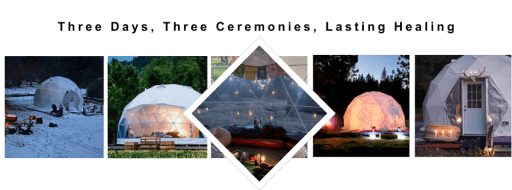
Nature provides this anchoring in ways that no room can replicate. The solidity of the earth. The predictability of wind and water. The absence of sudden, artificial noise.
This is why retreats grounded in nature are so important for military trauma, as explored in:
Psilocybin Retreats in the USA: Safe, Guided Healing in Nature https://meehlfoundation.org/psilocybin-retreats-usa-safe-guided-healing/
Integration: Bringing the Warrior Home
The ceremony is not the end.
Integration is where veterans begin to translate insight into daily life — relationships, parenting, work, self-respect.
This phase often includes:
- Learning to sit with emotion without threat response
- Rebuilding trust in one’s own moral compass
- Allowing grief without self-punishment
Integration support prevents spiritual insight from becoming destabilizing. It helps veterans return not as civilians pretending to be fine — but as whole humans who have been changed and can now live with that truth.
Stories of post-ceremony integration appear in:
Psilocybin and Grief: Finding Light in the Darkness https://meehlfoundation.org/psilocybin-and-grief-finding-light-in-the-darkness/
🌿 A Call to Sacred Action
If you are a veteran — or love someone who is — and something in this story feels familiar, know this:
You are not broken.
Your nervous system adapted to survive extraordinary circumstances.
Healing does not require forgetting.
It requires being witnessed, supported, and given space to lay the armor down.
Yes — I’m Ready to Heal Now www.meehlfoundation.org/plant-medicine
Show Me the Retreat Details https://meehlfoundation.org/healing-ceremony-retreat3-day/
Send Me the Healing Blueprint https://meehlfoundation.org/psychedelic-therapy-retreats

Five Internal Reading Paths
What Actually Happens at a Psilocybin Retreat? https://meehlfoundation.org/what-actually-happens-at-a-psilocybin-retreat/
Healing Ceremony Retreat (3-Day) https://meehlfoundation.org/healing-ceremony-retreat3-day/
Healing I Didn’t Know I Needed — Psilocybin Retreat Story https://meehlfoundation.org/healing-i-didnt-know-i-needed-psilocybin-retreat-story/
Psilocybin and Addiction Recovery: Releasing Old Patterns https://meehlfoundation.org/psilocybin-and-addiction-recovery-releasing-old-patterns/
Mushroom Retreat for Trauma & Emotional Renewal https://meehlfoundation.org/mushroom-retreat-for-trauma-emotional-renewal/
🌿 Cornerstone Resources
Psychedelic Therapy Retreats: Transform Trauma into Healing https://meehlfoundation.org/psychedelic-therapy-retreats
Shamanic Plant Medicine Retreat: Ancient Practices for Modern Healing https://meehlfoundation.org/shamanic-plant-medicine-retreat
Psilocybin Ceremony: Sacred Healing and Transformation https://meehlfoundation.org/psilocybin-ceremony
Healing Retreat for Trauma & PTSD: Sacred Wholeness https://meehlfoundation.org/healing-retreat-for-trauma-ptsd
Psilocybin Retreats in the USA: Safe, Guided Healing in Nature https://meehlfoundation.org/psilocybin-retreats-usa-safe-guided-healing
📚 External Author & Research Sources
Sebastian Junger — Tribe (war, belonging, moral injury) https://www.sebastianjunger.com/tribe-by-sebastian-junger
Dr. Jonathan Shay — Moral Injury & Combat Trauma https://www.ptsd.va.gov/professional/treat/cooccurring/moral_injury.asp
Bessel van der Kolk — The Body Keeps the Score https://besselvanderkolk.com/resources/the-body-keeps-the-score/
Dr. Rachel Yehuda — Trauma & Epigenetics Research https://icahn.mssm.edu/profiles/rachel-yehuda
Dr. Judith Herman — Trauma and Recovery https://judithherman.com/