
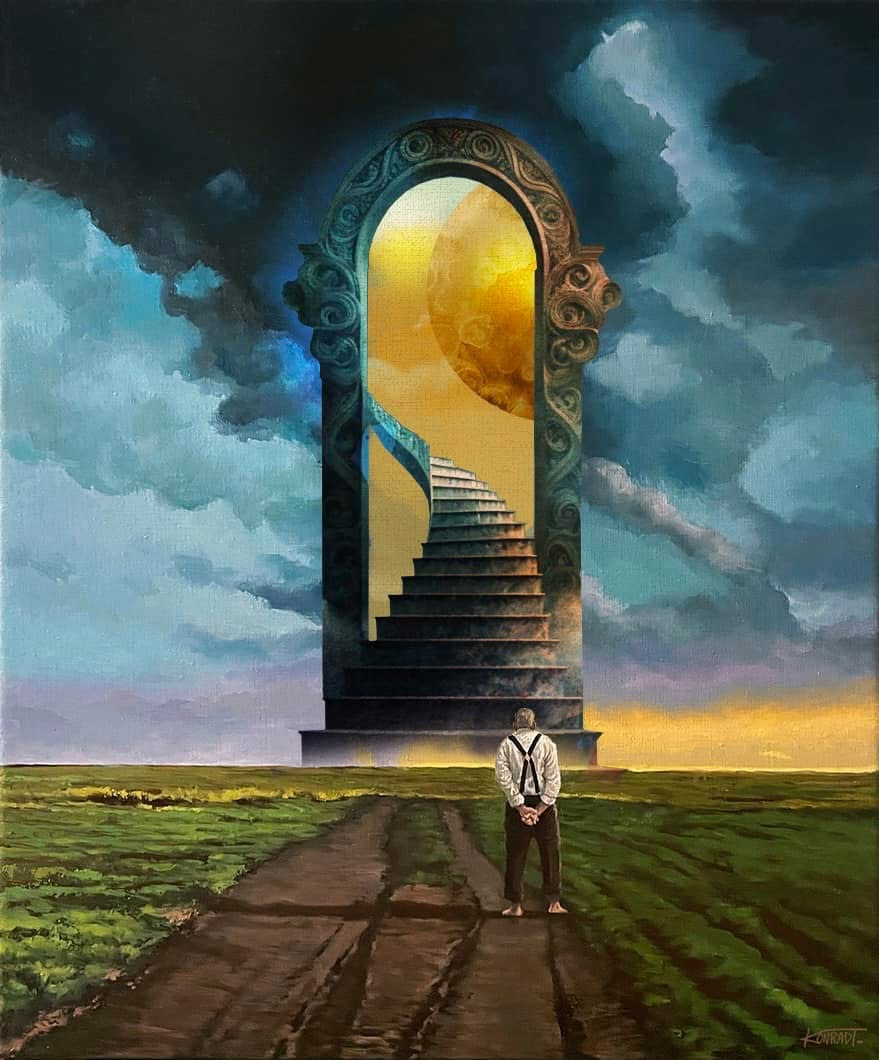
Psilocybin and Anxiety: Releasing Fear Through Sacred Medicine
Anxiety has become one of the most common emotional struggles of modern life. Millions of people wake up each day with a nervous system that feels constantly on edge—heart racing, thoughts spiraling, bodies unable to fully relax.
For some, anxiety appears as chronic worry. For others, it manifests as panic attacks, social fear, or a persistent sense that something is wrong even when life appears stable.
Traditional approaches to anxiety often focus on managing symptoms. Medication may reduce intensity, therapy can help people understand their thoughts, and lifestyle changes may provide relief.
But many people discover that anxiety is not simply a problem to suppress.
It is often a signal.
A message from the nervous system that something deeper within the psyche is seeking attention, healing, or release.
In recent years, growing research and clinical interest have explored the potential of psilocybin—the naturally occurring psychedelic compound found in certain mushrooms—as a catalyst for addressing the deeper roots of anxiety.
When approached in safe, supportive, and intentional environments, psilocybin experiences may help individuals release fear patterns that have been held in the body and mind for years.
Understanding the Roots of Anxiety
Anxiety is not simply a mental phenomenon. It is a whole-body experience.
The nervous system constantly scans the environment for signals of danger or safety. When it perceives threat, the body activates protective responses designed to keep us alive.
These responses include increased heart rate, heightened awareness, muscle tension, and rapid thinking.
For individuals with chronic anxiety, this protective system can become overactive.
Even in safe environments, the body may continue reacting as if danger is present.
Trauma research has highlighted that past experiences—especially overwhelming or unresolved events—can leave lasting imprints on the nervous system. These imprints may continue to shape emotional responses long after the original situation has passed.
This perspective has been explored extensively by clinicians such as Bessel van der Kolk, whose work emphasizes that trauma is often stored in the body rather than simply remembered in the mind.
When the nervous system remains stuck in states of hypervigilance or fear, anxiety can become a persistent companion.
Why Conventional Approaches Sometimes Fall Short
Many conventional treatments for anxiety focus on regulating thoughts.
Cognitive strategies help individuals identify negative beliefs, challenge distorted thinking, and develop healthier perspectives.
These approaches can be incredibly valuable.
However, they may not fully address anxiety that originates in the body.
When fear responses are rooted in nervous system dysregulation, insight alone may not be enough to shift the pattern.
People often describe knowing logically that they are safe while still feeling intense anxiety in their body.
This disconnect between mind and body is where alternative approaches—including somatic therapies, mindfulness practices, and psychedelic-assisted healing—have begun to gain attention.
How Psilocybin Changes the Landscape of the Mind
Psilocybin interacts with the brain in ways that temporarily alter perception, emotional processing, and patterns of neural communication.
Brain imaging research has shown that psilocybin can reduce activity in rigid brain networks associated with repetitive thinking and self-referential loops.
These networks are often linked to rumination and chronic worry.
When their dominance softens, individuals may experience a greater sense of openness and emotional fluidity.
Thought patterns that once felt fixed can suddenly become flexible.
People frequently report experiencing insights that feel both surprising and deeply familiar—like remembering something they once knew but had forgotten.
This shift can be particularly meaningful for those struggling with anxiety.
Instead of feeling trapped inside cycles of fearful thinking, individuals may encounter new perspectives that reveal the deeper origins of their emotions.
Encountering Fear Rather Than Avoiding It
One of the paradoxical aspects of psilocybin experiences is that they do not necessarily eliminate fear by suppressing it.
Instead, they often invite individuals to encounter fear directly.
At first, this idea may sound intimidating.
But when the experience unfolds within a safe ceremonial or therapeutic setting, individuals often discover that approaching fear with curiosity rather than resistance allows it to transform.
Memories that once felt overwhelming may appear with new clarity.
Emotions that have been pushed aside for years may finally be expressed.
As these experiences move through awareness, the nervous system can begin releasing layers of tension that were previously held in place by avoidance.
Many participants describe this process as a kind of emotional exhale.
The Role of Ceremony and Intentional Space
The context in which psilocybin is experienced plays a profound role in shaping its effects.
Traditional cultures have long emphasized the importance of ceremony when working with sacred medicines.
Ceremony creates a container that supports emotional safety, intention, and respect.
Within this container, individuals are encouraged to approach the experience not as entertainment or escape, but as a process of inner exploration.
Elements such as music, supportive guides, grounding practices, and integration discussions help participants navigate the experience with greater stability.
This supportive environment can be especially important for individuals who struggle with anxiety.
Knowing that the experience is being held with care can allow the nervous system to relax enough for deeper emotional work to occur.
Reconnecting With the Body
Another important aspect of psilocybin experiences is the way they can reconnect individuals with their physical sensations.
Anxiety often creates a sense of disconnection from the body.
People may feel trapped in cycles of thinking while losing touch with their breath, their posture, or the signals their body is sending.
Psilocybin experiences can sometimes restore awareness of these sensations.
Participants may notice how emotions move through the body—tightness in the chest, warmth in the heart, or waves of energy flowing through the limbs.
By allowing these sensations to arise and pass without resistance, individuals may discover that emotions are not permanent states.
They are processes that can move and change.
This realization can be deeply empowering for people who have felt dominated by anxiety.
Insights Into the Nature of Fear
Many individuals report that psilocybin experiences reveal a surprising truth about fear.
Fear is often less solid than it appears.
During expanded states of awareness, the mind may recognize that many anxieties are built upon stories the brain has constructed to protect itself.
These stories may once have served a purpose, helping someone navigate difficult situations or unpredictable environments.
But over time, they can become outdated.
Psilocybin experiences sometimes allow people to revisit these protective narratives with compassion rather than judgment.
Instead of fighting against anxiety, individuals may begin to understand the part of themselves that created it.
This understanding can soften internal conflict and create space for healing.
Integration: Bringing Insights Into Daily Life
The healing potential of psilocybin does not end when the experience concludes.
Integration is the process of translating insights into meaningful changes in everyday life.
For individuals working with anxiety, integration might include practices such as:
-
mindfulness meditation
-
breathwork or somatic exercises
-
therapy or coaching
-
journaling and reflection
-
spending time in nature
These practices help reinforce the new perspectives and emotional flexibility that emerged during the experience.
Integration ensures that the insights gained during expanded states of consciousness continue supporting long-term well-being.
A New Relationship With Fear
Perhaps the most profound transformation many people report after psilocybin experiences is a shift in their relationship with fear itself.
Fear does not disappear entirely—nor should it. Fear is an essential part of the human survival system.
But the relationship with fear changes.
Instead of feeling trapped by it, individuals may begin to see fear as information rather than a command.
They learn to listen without immediately reacting.
They discover that courage does not mean the absence of fear.
It means moving forward with awareness and compassion for the parts of themselves that once felt overwhelmed.
The Path Toward Inner Peace
Anxiety often convinces people that peace is something distant, something they must earn by solving every problem in their lives.
Yet many individuals who have explored psilocybin in supportive settings report discovering something unexpected.
Peace may not come from eliminating uncertainty.
It may come from learning to trust the unfolding of life itself.
Through expanded awareness, emotional release, and renewed connection with the body, psilocybin experiences can sometimes help individuals step out of chronic fear patterns and into a deeper sense of presence.
From that place, healing becomes less about escaping anxiety and more about understanding it.
And in that understanding, many people begin to rediscover a quiet sense of calm that had been waiting beneath the surface all along. 🌿
When Fear Becomes a Cage
Anxiety is often described as a storm: unpredictable, swirling, and unrelenting. It can live quietly in the background, in the stomach or chest, or erupt suddenly, overwhelming thoughts and decisions.
Many who come to psilocybin retreats have spent years trying to manage this storm. Therapy, meditation, medication — all helpful, but often incomplete. Anxiety persists because it is not just cognitive; it is somatic, habitual, and deeply patterned in the nervous system.
Psilocybin does not simply quiet the mind. It works on the body-mind system, opening a safe space to feel fear without being consumed by it.
How Psilocybin Works on Fear
Neuroscience explains why psilocybin is effective for anxiety:
-
It reduces activity in the amygdala, the brain’s fear center.
-
It increases neuroplasticity, allowing new emotional pathways to form.
-
It quiets the default mode network, creating space to observe fear rather than being trapped in it.
Dr. Robin Carhart-Harris’s research at Imperial College London shows that psilocybin creates an opportunity for the brain to re-pattern emotional responses, especially anxiety rooted in trauma or overactive threat detection.
https://www.imperial.ac.uk/people/r.carhart-harris
Ceremony as a Safe Container for Fear
In shamanic and guided ceremonies, participants are held through fear rather than abandoned to it.
-
Ritual music, guided breathing, and ceremonial support provide nervous system regulation.
-
Guides create a relational container where intense emotions can rise safely.
-
Participants learn that fear is not inherently dangerous, it is a signal to be witnessed.
As Sandra Ingerman writes in The Book of Ceremony, ceremonial containers allow participants to experience strong emotion without overwhelm, teaching the nervous system that presence is safer than contraction.
https://www.goodreads.com/book/show/14032935-the-book-of-ceremony
Reframing Fear Through Perspective
Under psilocybin, memories and emotional patterns often emerge with clarity.
-
Childhood anxieties, social fears, and survival instincts can be seen with new context.
-
Participants witness old fear patterns without judgment.
-
The nervous system begins to dissociate threat from present reality.
James Fadiman in The Psychedelic Explorer’s Guide describes this as “seeing fear in full light, and discovering it is smaller than previously imagined.”
https://www.goodreads.com/book/show/11096530-the-psychedelic-explorer-s-guide

Fear as a Teacher
Psychedelic journeys often reveal fear as information rather than enemy.
-
Fear points to unresolved trauma.
-
Fear illuminates patterns of avoidance.
-
Fear can guide ethical and relational choices when integrated consciously.
John W. Allen, in Sexy Sacred Shrooms, highlights that the sacred use of psilocybin allows fear to be experienced, learned from, and released — transforming anxiety into insight.
https://www.goodreads.com/book/show/31594687-sexy-sacred-shrooms
Integration: Bringing Calm Into Daily Life
Ceremony is just the beginning. Integration practices help participants translate insights into everyday resilience:
-
Daily breathwork and grounding exercises
-
Journaling triggers and new emotional responses
-
Mindful movement to release somatic tension
-
Supportive conversation with guides or therapists
Integration ensures the nervous system remembers safety, reducing anxiety long after ceremony.
External Wisdom: Podcasts and Research
The Psychedelics Today Podcast explores anxiety-focused journeys, highlighting case studies where participants gained lasting relief through structured support and guided integration.
https://psychedelicstoday.com/podcast/
Robert E. Ryan, in Strong Eye of Shamanism, emphasizes that shamanic frameworks have long used ceremonial structure to help people face fear and reclaim agency over their lives.
https://www.goodreads.com/book/show/11858544-strong-eye-of-shamanism
Emotional Freedom After Ceremony
After psilocybin, participants often report:
-
Reduced automatic fear responses
-
Greater tolerance for uncertainty
-
Increased trust in themselves and life
-
Capacity for presence in relationships and work
Anxiety no longer dominates decisions; it becomes a guide rather than a tyrant.
🔥 Call to Action — Transform Fear Into Freedom
If anxiety limits your life…
If fear keeps you from presence, joy, or connection…
If you are ready to experience regulated, embodied emotional freedom…
The Meehl Foundation offers psilocybin retreats designed to safely release fear, restore nervous system balance, and support long-term integration.
👉 Begin Your Healing Journey Today
https://meehlfoundation.org/plant-medicine

Meehl Foundation Blog
https://meehlfoundation.org/sacred-psilocybin-and-emotional-resilience-reclaim-strength/
https://meehlfoundation.org/psilocybin-and-childhood-trauma-reclaiming-the-inner-child/
https://meehlfoundation.org/psilocybin-and-grief-finding-light-in-the-darkness/
https://meehlfoundation.org/what-actually-happens-at-a-psilocybin-retreat/
https://meehlfoundation.org/safe-and-guided-psilocybin-retreats-healing-journey/
Cornerstone Resources
https://meehlfoundation.org/healing-ceremony-retreat3-day/
https://meehlfoundation.org/psilocybin-i-walked-in-with-fear-and-walked-out-with-myself/
https://meehlfoundation.org/transformative-psilocybin-retreats-sacred-healing-wholenes
https://meehlfoundation.org/psilocybin-retreats-usa-safe-guided-healing/
https://meehlfoundation.org/psilocybin-ceremony-retreats-for-healing/