Psilocybin Retreats for Veterans: A New Path Beyond PTSD
I never expected healing to come this way.
Not after everything.
Not after the years I spent waking up in a cold sweat, scanning every room, tensing at sounds most people never even notice.
If you had told me that a psilocybin retreat—something I once thought was for “other people”—would give me my first real breath of peace in over a decade, I would have laughed. Or maybe I would have walked away. Those of us who have lived through the kind of things veterans live through… we don’t usually believe in miracles.
But this wasn’t a miracle.
It was something else.
Something real.
Something intentional.
Something that finally made me feel safe in my own skin.
This is my story—one I’m finally ready to tell.
The Years I Spent Holding My Breath
People don’t talk enough about the quiet years after service—the years when the world looks normal on the outside while everything inside feels like a live wire.
I wasn’t broken.
I was tired.
Tired in a way that seeped into every part of my life.
For me, PTSD wasn’t one event. It was a slow drip, a thousand moments I never had time to feel. You don’t get to fall apart when lives depend on your ability to stay focused. You store it. You press it down. You swallow it again and again, until one day your body says:
“I can’t carry this anymore.”
I tried the therapies.
I tried the meds.
I tried pretending I was fine.
I tried pretending I didn’t need help.
But the truth is, I was disappearing from myself.
And I didn’t know how to come back.
The Day Someone Said the Words That Changed Everything
The shift came from another veteran—someone who understood the “I’m fine” mask because they’d worn it, too.
We were sitting in the back of a community center after a peer support meeting when they leaned toward me and said:
“You don’t have to keep living inside the blast radius of your own past.”
I didn’t understand what they meant—not fully—until they told me their story.
A psilocybin retreat.
Safe. Legal. Guided.
Trauma-informed.
Veteran-friendly.
I listened, skeptical. Even annoyed. The idea felt too strange, too unfamiliar.
But something in their voice—something calm in the way they breathed—made me curious.
They gave me links to research by Johns Hopkins and Imperial College London—studies I had never heard of, studies showing psilocybin helping with PTSD, depression, trauma, end-of-life anxiety:
-
Rachel Yehuda, PhD – Mount Sinai/VA research on psychedelics for veterans with PTSD.
Link: https://reports.mountsinai.org/article/psych2023-09-psychedelics Mount Sinai Reports -
U.S. Department of Veterans Affairs – Overview of psychedelic-assisted therapies (including psilocybin) for PTSD.
Link: https://www.ptsd.va.gov/professional/treat/txessentials/psychedelics_assisted_therapy.asp PTSD VA -
Grace Blest‑Hopley et al. – Study in Frontiers in Psychiatry showing improvements in veterans (with PTSD/TBI) following psilocybin retreats.
Link: https://www.frontiersin.org/journals/psychiatry/articles/10.3389/fpsyt.2025.1594307/full Frontiers -
AK Davis et al. – BMJ Open protocol for an open-label proof-of-concept trial of psilocybin-assisted therapy for veterans with PTSD.
Link: https://bmjopen.bmj.com/content/13/5/e068884 BMJ Open -
Imperial College London Centre for Psychedelic Research – Institutional research overview on psychedelics and trauma/psychiatric disorders.
Link: https://www.imperial.ac.uk/psychedelic-research-centre/ Psychiatry Online
I read everything.
And for the first time in years, something inside me unclenched.
Finding a Place That Actually Felt Safe
A lot of veterans don’t realize this, but not all retreats are created equal.
Some are spiritual. Some clinical. Some a blend.
I needed something that respected the weight I carried.
Something trauma-informed.
Something structured.
Something safe.
I ended up reading through every page of the Meehl Foundation, especially the trauma-specific programs and veteran-ready approaches:
-
Psilocybin Retreats USA
https://meehlfoundation.org/psilocybin-retreats-usa-safe-guided-healing-in-nature/?utm_source=chatgpt.com -
Healing Retreat for Trauma & PTSD
https://meehlfoundation.org/healing-retreat-for-trauma-ptsd/?utm_source=chatgpt.com -
Psychedelic Therapy Retreats
https://meehlfoundation.org/psychedelic-therapy-retreats/?utm_source=chatgpt.com -
Shamanic Plant Medicine Retreat
https://meehlfoundation.org/plant-medicine/shamanic-plant-medicine-retreat-ancient-practices-modern-healing/?utm_source=chatgpt.com -
Psilocybin Ceremony: Sacred Healing & Transformation
https://meehlfoundation.org/psilocybin-ceremony-sacred-healing-transformation/?utm_source=chatgpt.com
Something about the way they wrote about trauma…
It wasn’t sensationalized.
It wasn’t minimized.
It wasn’t treated like a checkbox.
It felt human.
It felt like they understood veterans.
It felt safe.
So I went.
Arriving With Fear in My Bones
The day I arrived at the retreat center, I felt like a fraud.
Other veterans were there too—some who had seen more than I had, some less, all carrying their own ghosts. One person said they hadn’t felt a full night of sleep in fifteen years. Another said they came because they “couldn’t keep pretending.”
We didn’t have to explain ourselves.
We didn’t have to hide.
The silence between us wasn’t empty—it was understood.
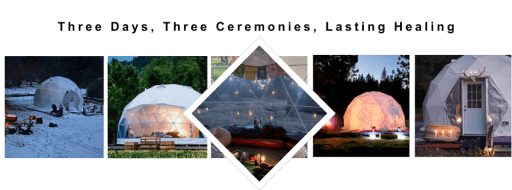
The facilitators weren’t just “guides.” They were trained, compassionate, grounded people who knew how to hold trauma gently. Some had decades of experience in spiritual healing. Some had backgrounds in psychology. Some were both. There was also a shaman Debra Meehl trained in DBT, trauma therapy and hypnosis, Western medicine, Eastern modalities and Indigenous medicine.
For the first time in a long time, I felt like I didn’t need to be on guard.
But that didn’t stop the fear.
Fear of losing control.
Fear of what might come up.
Fear of facing the things I had buried so deeply even I couldn’t name them anymore.
The Ceremony That Broke Something Open
I won’t pretend it was easy.
Healing rarely is.
But it was real.
When the psilocybin began to soften the edges of my mind, I didn’t feel “high.”
I felt open—like the armor I’d been wearing for years finally loosened enough for breath to reach places it hadn’t touched in a long time.
Emotions didn’t flood me.
Memories didn’t overwhelm me.
I wasn’t swept into chaos.
Instead, I felt… held. Supported. Safe.
A facilitator sat beside me as I began to feel decades of tension melt from my shoulders. They guided me with simple words:
“You’re safe.
You’re here.
You’re not in danger anymore.”
Something cracked inside me.
Not like breaking—more like releasing.
I realized for the very first time that my body didn’t know the war was over.
My mind had returned home.
My body never had.
I cried—deep, quaking sobs I didn’t know I was capable of.
And instead of feeling shame, I felt relief.
I felt like I was finally telling the truth.

What I Saw, What I Accepted, What I Let Go
People always ask what I “saw.”
But the most important part wasn’t something I saw—it was something I understood.
I had spent years believing I had to carry everything alone.
That healing was weakness.
That breaking down meant I was failing.
But in that ceremony, surrounded by people who understood trauma more intimately than most clinicians ever could, I realized:
I wasn’t broken.
I was wounded.
And wounds can heal.
I felt my nervous system unwind.
I felt my jaw loosen.
I felt my breath deepen.
I felt—for the first time in over a decade—peace.
Not excitement.
Not bliss.
Not euphoria.
Just quiet.
Just calm.
Just presence.
And that presence felt like coming home.
Integration: Where the Real Healing Happened
The integration sessions were just as important as the ceremony.
We talked.
We learned how to regulate our nervous systems.
We learned why trauma gets stuck in the body and how psilocybin helps the brain rewire.
We learned techniques to carry the healing forward once we left.
I remember telling the group:
“I didn’t walk out of here a different person.
I walked out finally feeling like myself.”
The others nodded.
They understood.
The Days and Weeks After: A Quiet Transformation
PTSD didn’t vanish overnight.
But everything got softer, more manageable, more spacious.
-
My sleep improved.
-
My hypervigilance eased.
-
My mind slowed enough for stillness to return.
-
My relationships became easier.
-
My body finally believed it was safe.
It wasn’t the kind of change you notice in one dramatic moment—
it was the kind that accumulates quietly in the background until one day you realize:
“I’m not living in survival mode anymore.”
And that’s when I knew:
This wasn’t a temporary shift.
It was a new path.
A Message to Any Veteran Reading This
I’m not here to tell you what you should do.
I’m not here to convince you of anything.
But if you’re carrying trauma that feels too heavy…
If you’re tired of white-knuckling your way through life…
If you’re exhausted from being “fine”…
If you want peace more than you want pride…
Please hear me:
You deserve to feel safe again.
You deserve a life that isn’t controlled by the past.
You deserve healing.
And you’re not alone.
Psilocybin isn’t an escape.
It’s not a shortcut.
It’s not magic.
It’s a doorway.
A possibility.
A path back to yourself.
One I didn’t know existed until I walked it.
If You’re Ready, Don’t Wait
If you’re reading this and something inside you is whispering,
“Maybe this is what I’ve been looking for…”
don’t ignore that.
That whisper is the part of you that still believes healing is possible.
That whisper is your nervous system asking for relief.
That whisper is hope trying to reach you.
So here’s the truth:
Most people wait until they’re breaking to reach for help.
But veterans don’t break.
We endure.
We survive.
We carry more than anyone ever should.

But you don’t have to carry this forever.
If you’re ready for a real chance at healing—
not band-aids, not temporary coping,
but real transformation—
a psilocybin retreat could be the chapter where your life finally turns.
Not because the medicine fixes you.
But because it finally lets you feel what freedom is supposed to feel like.
When you’re ready, the door is open.
You just have to walk through it.
— Jordan (name changed)
In the woods in Washington State